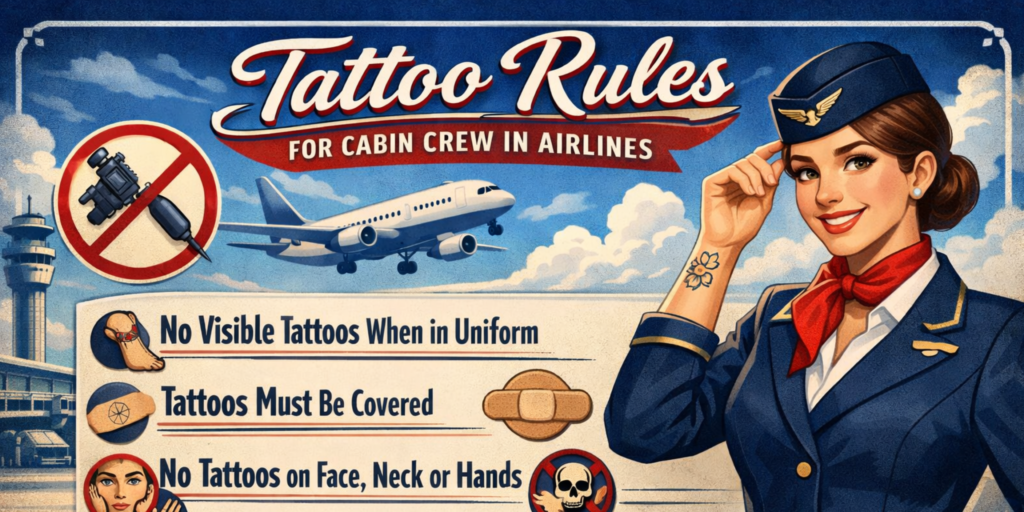
Tattoo Rules for Cabin Crew in Airlines
Becoming a cabin crew member is not just about traveling the world or serving passengers; it’s about representing an airline with professionalism and a polished appearance. Airlines place a strong emphasis on how cabin crew look because first impressions matter, whether it’s at the airport or on board. One key aspect that often raises questions is Tattoo Rules for Cabin Crew in Airlines. While tattoos are becoming more popular and widely accepted in society, airlines still have strict guidelines about where and how tattoos can be visible. Why does this matter? Imagine meeting passengers from different cultures—visible tattoos might be considered unprofessional or distracting in some countries. For aspiring cabin crew, understanding these rules is essential to avoid career setbacks and ensure a smooth recruitment process. At Ellan Cabin Crew Academy, we guide students on every aspect of grooming, including understanding tattoo policies so they can shine in interviews and onboard roles. Read More : Cabin Crew Salary in India & Abroad – Complete Details Importance of Grooming Standards in Airlines Appearance plays a big role in the airline industry. Cabin crew are often the first point of contact for passengers, so their grooming and professional look directly reflect the airline’s brand. According to industry surveys, over 70% of passengers say that well-groomed cabin crew positively influence their perception of an airline. Airlines expect cabin crew to maintain a neat, polished, and uniform look at all times. This includes tidy hair, clean nails, minimal jewelry, and overall professional attire. These grooming standards are not just about rules—they help create trust, comfort, and a positive experience for passengers. This is where Tattoo Rules for Cabin Crew in Airlines come in. Many airlines include tattoo policies as part of their grooming standards. Visible tattoos on hands, neck, or face can sometimes be restricted, while small, hidden tattoos might be acceptable. Understanding these rules ensures that aspiring cabin crew can meet airline expectations and present themselves confidently during interviews and on the job. At Ellan Cabin Crew Academy, we emphasize grooming and appearance as a core part of training, including guidance on tattoos, so students are fully prepared to meet airline standards. Read More : Why Choose Ellan Cabin Crew Academy for Aviation Training? General Tattoo Policies Across Airlines Tattoo rules for cabin crew can vary a lot depending on the airline and the country. Domestic airlines in India may be a bit more flexible, while international carriers often have strict policies to maintain a professional and neutral appearance for passengers from all cultures. Most airlines restrict visible tattoos on areas like the hands, neck, face, and forearms. Small, hidden tattoos under the sleeves or behind the ears are generally more acceptable. Some airlines also consider the size, color, and content of the tattoo—offensive words, religious symbols, or bright, distracting colors are usually not allowed. For example, airlines like Emirates and Singapore Airlines have very strict policies: tattoos must be covered at all times during duty. On the other hand, some domestic carriers allow small tattoos as long as they are not visible in the standard uniform. This shows that knowing the Tattoo Rules for Cabin Crew in Airlines is crucial before applying, especially if you plan to fly internationally. At Ellan Cabin Crew Academy, we provide detailed guidance on which tattoos could affect your career and how to manage them, so students can focus on building a professional appearance that impresses recruiters. Read More : Top 5 Mistakes in Cabin Crew Interview Common Areas Where Tattoos Are Allowed or Restricted When it comes to Tattoo Rules for Cabin Crew in Airlines, not all tattoos are treated the same. Airlines usually differentiate between hidden and visible tattoos. Commonly accepted areas include places like behind the ears, ankles, lower back, or areas covered by the uniform. These tattoos are less likely to impact your chances of selection. On the other hand, tattoos on arms, hands, neck, and face are generally restricted. Some airlines also have rules for sleeve tattoos or large artwork—even if partially covered, they may need to be concealed completely during duty. Airlines define “visible tattoos” as any tattoo that can be seen while wearing the standard uniform, including short sleeves or standard necklines. For example, a forearm tattoo that peeks out from a short-sleeved shirt is considered visible and may need to be covered with makeup or sleeves. Understanding these policies early helps aspiring cabin crew make informed choices. At Ellan Cabin Crew Academy, we teach students how to navigate tattoo rules professionally, so they can focus on excelling in interviews and onboard duties without worrying about appearance-related setbacks. Read More : How to Become a Cabin Crew in India (2026 Guide) How Tattoos Can Impact Cabin Crew Recruitment Tattoos can play a surprising role during cabin crew recruitment. Airlines often check for visible tattoos during interviews, medical examinations, or grooming assessments. Recruiters want to ensure that candidates meet professional appearance standards, and visible tattoos may raise concerns depending on their location, size, or content. In some cases, tattoos can even disqualify candidates. For instance, tattoos on the hands, neck, or face are usually a strict no, especially for international airlines like Emirates or Qatar Airways, where the emphasis on a uniform professional look is very high. Tattoos with offensive words, inappropriate symbols, or religious imagery may also lead to rejection. However, having tattoos doesn’t always mean the end of your cabin crew dreams. Applicants can manage tattoos by covering them with makeup, wearing long sleeves, or using other clothing options to ensure they remain hidden during interviews and duty. Even small hidden tattoos on areas like ankles or behind the ears are usually acceptable and don’t affect recruitment chances. Understanding Tattoo Rules for Cabin Crew in Airlines before applying gives candidates an edge. At Ellan Cabin Crew Academy, we guide students on grooming, interview preparation, and tattoo management so they can confidently pursue their cabin crew career without any last-minute surprises. Cultural and Regional Differences Tattoo acceptance for cabin
Tattoo Rules for Cabin Crew in Airlines Read More »